
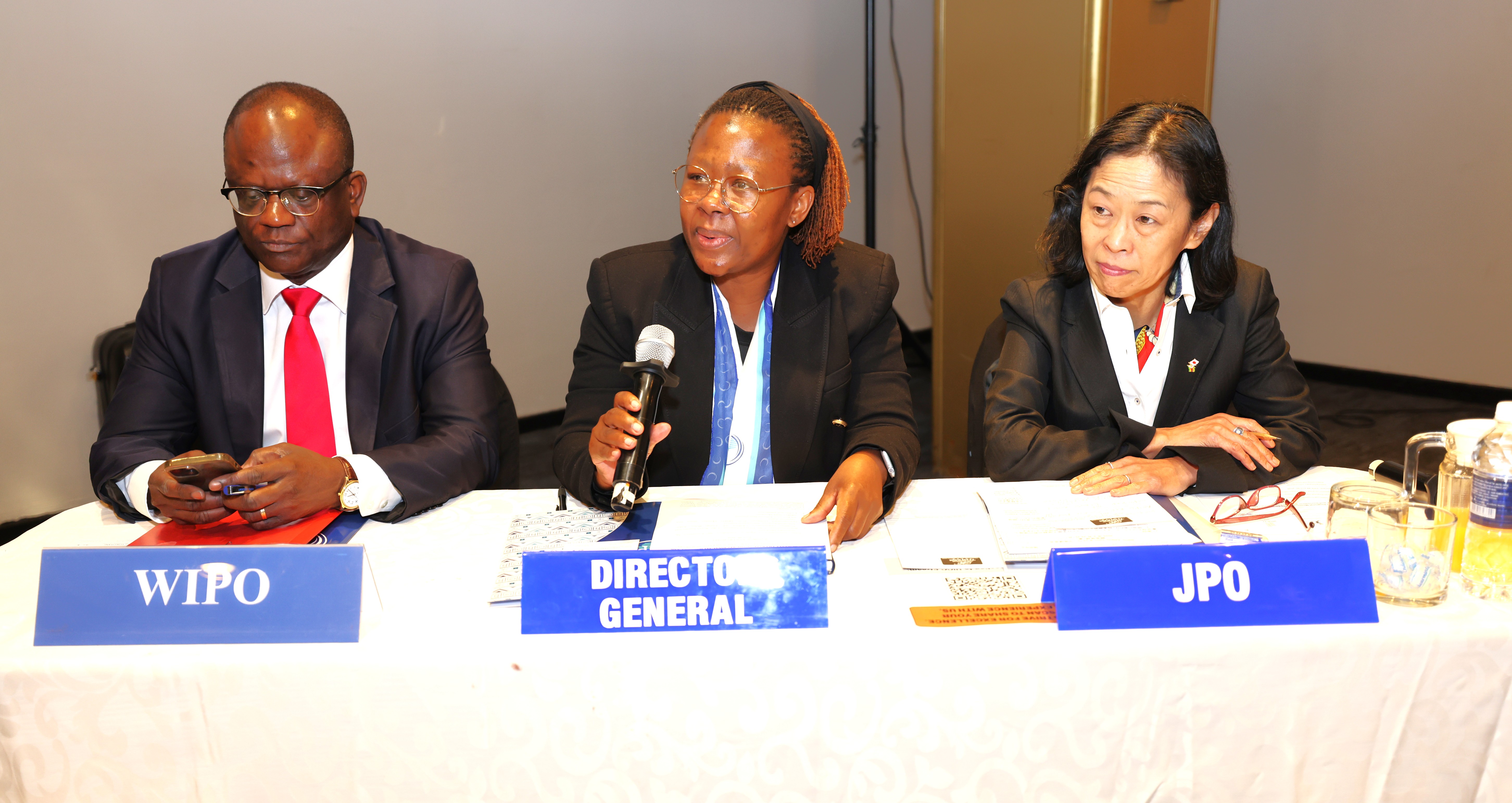
WIPO and ARIPO, with support
from the Japan Patent Office (JPO), convened the annual Regional Meeting on the
Development of the ARIPO Technology and Innovation Support Centre (TISC)
Network in Harare from 29 to 30 June 2026.
As Africa continues its
transition towards knowledge-based and innovation-driven economies, the meeting
focused on one of the continent's most strategic development needs: improving
access to technological knowledge and enabling innovators to use it to create
solutions, enterprises, and industries.
Opening the meeting, in his
remarks read by the Head of ARIPO Academy, Dr. Outule Rapuleng, the ARIPO
Director General, Mr. Bemanya Twebaze, noted that while approximately 3.7
million patent applications were filed globally in 2024, Africa's participation
in global patent activity remains comparatively low. He emphasized that
strengthening innovation support systems is essential if African researchers,
universities, SMEs and entrepreneurs are to compete in an increasingly
knowledge-driven global economy.
A key message emerging from
the meeting was that patents are not only legal instruments but also one of the
world's largest repositories of technical and scientific knowledge. Access to
patent information allows innovators to avoid duplication, identify technology
trends, improve research outcomes, assess market opportunities and accelerate
commercialization.
Through the TISC programme, WIPO
and ARIPO are helping to democratize access to this knowledge by bringing
intellectual property and technology support services closer to innovators
through national IP Offices, universities, research institutions, innovation
hubs and business support organizations across the region.
The annual meeting reviewed
progress in awareness-raising, capacity development, institutional policies,
and access-to-information platforms, while identifying practical actions to
strengthen national TISC networks in ARIPO Member and Observer States.
The TISC meeting facilitator, Mr.
Elangi Botoy Ituku, Industrial Property Information Officer from WIPO, also guided
participants and discussed ARIPO's broader innovation capacity development
framework and the role of Strategic Pillar IV of the ARIPO Strategic Plan in
supporting human capital development, institutional strengthening and the use
of intellectual property as a driver of research, entrepreneurship and
industrial development.
The annual TISC programme has
become an important platform for strengthening national innovation ecosystems
and ensuring that intellectual property serves not only as a protection
mechanism but also as a tool for development and competitiveness.
By improving access to
knowledge, building technical capabilities and supporting the commercialization
of innovation, ARIPO is helping to create the conditions for stronger research
outcomes, better technologies, more competitive enterprises and increased
opportunities for economic transformation across Africa.
The meeting reaffirmed the
shared commitment of ARIPO, WIPO and Member States to move beyond awareness of
intellectual property towards its effective utilization and commercialization,
ensuring that African ideas can be transformed into products, businesses and
sustainable socio-economic impact.
ARIPO’s knowledge
infrastructure includes the ARIPO Regional IP Database, the eService platform
and the Anderson Ray Zikonda Library, all of which improve access to
intellectual property information and technical resources for researchers,
innovators, policymakers and businesses.